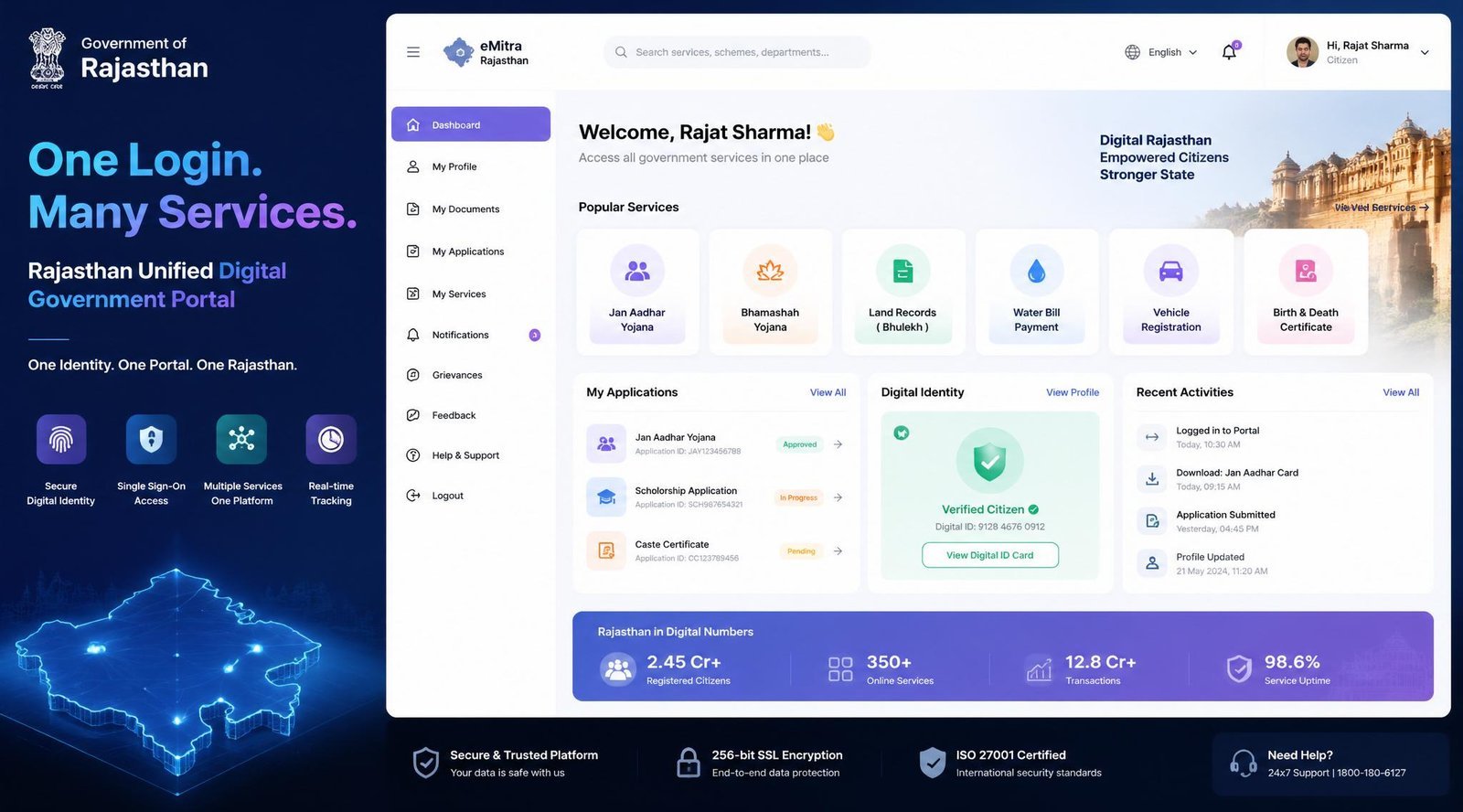
In today’s digital-first world, governments are rapidly shifting toward unified systems that reduce complexity for citizens. Rajasthan has taken a major step in this direction by introducing a centralized login system that connects multiple government services under one identity. Instead of managing different usernames and passwords for each department, users can access everything through a single platform. This is where the concept of SSO ID becomes essential for smooth digital governance.
At its core, this system is designed to simplify how people interact with government services online. Whether someone wants to apply for a job, pay utility bills, or access welfare schemes, everything can be managed through one secure identity. The idea is simple but powerful: one identity, multiple services, zero confusion.
Understanding the Concept Behind the System
The Rajasthan Single Sign-On framework was created to solve a long-standing problem—fragmented access to government services. Earlier, users had to create separate accounts for different departments, which often led to forgotten passwords, duplicate records, and unnecessary delays.
With the introduction of a unified system, users now register once and gain access to dozens of services. This approach not only saves time but also reduces administrative burden on government departments. It also ensures that data remains consistent across platforms, improving accuracy and transparency.
From a user perspective, the experience is straightforward. After creating a profile, individuals can log in and explore a wide range of services without repeating the authentication process. This level of convenience is a major step toward digital empowerment in the state.
How the System Works in Real Life
When a user registers on the portal, their identity is verified through basic personal details such as mobile number, email, and government-issued identification. Once verified, a unique digital identity is created that acts as a gateway to all integrated services.
Every time a user logs in, the system verifies credentials and grants access to multiple departments simultaneously. This eliminates the need for multiple logins and reduces the risk of password fatigue, which is a common issue in digital systems.
The backend infrastructure is designed to ensure smooth communication between different government databases. For example, if a user updates their profile or applies for a service, the information is automatically synchronized across relevant departments.
This seamless integration is what makes the system efficient and reliable for millions of users across Rajasthan.
Key Features That Make It Useful
One of the strongest aspects of this digital identity system is its wide range of features designed for both citizens and government employees. It is not just a login tool but a complete digital service hub.
Some of the most notable features include:
- Unified access to multiple government departments
- Secure authentication with encrypted data protection
- Simple registration and user-friendly interface
- Mobile and desktop accessibility
- Real-time updates and notifications
- Integrated dashboard for managing services
These features are designed to make government interaction more transparent and accessible. Instead of visiting offices physically or navigating multiple websites, users can complete tasks from a single platform.
Registration and User Experience
The registration process is intentionally designed to be simple so that even non-technical users can complete it without difficulty. Users are guided step-by-step through identity verification and profile creation.
Once registered, the dashboard becomes the central hub for all activities. It displays available services, application status, and personal information in an organized format. This reduces confusion and makes navigation intuitive.
The system also ensures that users can recover accounts easily in case of forgotten credentials, which is an important aspect of usability. Overall, the experience is built to be smooth, consistent, and efficient.
At this point, it is important to understand that SSO ID plays a central role in enabling this entire ecosystem by acting as the primary digital identity that connects everything together.
Security and Trust in the System
Security is one of the most critical aspects of any digital identity platform. The system uses multiple layers of protection, including encryption, secure authentication protocols, and regular monitoring to prevent unauthorized access.
User data is stored in a controlled environment, ensuring that personal information remains protected. Additionally, login attempts are monitored to detect suspicious activity, adding another layer of safety.
Trust is built not only through technology but also through transparency. Users are given control over their data, and every action is logged for accountability. This makes the system reliable for both citizens and government departments.
Practical Use in Everyday Government Services
The real value of this system becomes clear when we look at its practical applications. Citizens use it for a wide range of services such as applying for certificates, accessing welfare schemes, submitting job applications, and paying bills.
Students, job seekers, government employees, and business owners all benefit from this unified approach. Instead of dealing with multiple portals, they rely on one identity to complete essential tasks.
This level of integration significantly reduces delays and improves efficiency across departments. It also helps in reducing paperwork, making governance more environmentally friendly and cost-effective.
Why It Matters in Digital Governance
The introduction of a centralized identity system represents a major shift in how governments operate. It reflects a broader move toward digital transformation, where accessibility and efficiency are prioritized.
For citizens, it means fewer barriers and faster access to services. For the government, it means better data management and improved service delivery. Together, these benefits create a more connected and responsive administrative system.
As digital adoption continues to grow, systems like this will play an even more important role in shaping the future of governance in India.
Conclusion
The Rajasthan Single Sign-On system is a strong example of how technology can simplify governance and improve public services. It brings together multiple departments under one digital identity, making life easier for millions of users.
From registration to daily use, the platform is designed with simplicity, security, and efficiency in mind. It reduces complexity, saves time, and ensures that services are accessible to everyone.
In this entire ecosystem, SSO ID acts as the foundation that connects users to all services, making it a key element of Rajasthan’s digital infrastructure.